
-
12
-
5500 meters above sea level
-
Mostly in tents as Camping
-
Medium and Strong
-
Autumn
-
Trekking
-
20
-
60
The Snowman Trek is a 27-day journey through Bhutan’s remote Himalayas, starting in Paro with a cultural tour and a hike to Tiger’s Nest. The trek begins at Shana, crossing high-altitude passes (5,000m+), scenic valleys, and remote villages like Laya and Lunana. Highlights include views of Jomolhari, encounters with yak herders, and cultural experiences. Ending in Sephu, the trek concludes with a drive to Punakha and Paro. It’s a challenging adventure requiring excellent fitness and altitude acclimatization.
After hotel check-in, we’ll explore the town and visit the National Museum, depending on our arrival time and trek preparations. Overnight: Paro
We begin with a hike to the iconic Tiger’s Nest Monastery (Taktsang), a sacred site perched on a cliffside. The trek takes about 1.5 hours to a tea house viewpoint, followed by a short walk to a spot overlooking the monastery. After exploring this spiritual landmark, we return to the resort for lunch and an afternoon tour of Paro Valley. In the evening, we repack, leaving behind non-essential items for safekeeping. Overnight at Paro
A short 20-minute drive takes us past Drukyel Dzong (2580m), a 17th-century fortress, before continuing to Shana (2860m). Along the way, we pass traditional Bhutanese farmhouses and fields of rice, wheat, and barley, with glimpses of Jomolhari (7314m) at the valley’s head. Our trek begins on a wide, flat trail through forested fields, where we break for lunch before reaching our campsite.
We enter Jigme Dorji National Park, home to diverse flora and fauna. The trail winds through dense forests of oak, birch, and pine, gradually giving way to rhododendron as we ascend. Campsites here are simple clearings near water sources, used by yak herders and workers on Bhutan’s rural electrification project.
Climbing higher, we reach our camp at the base of Jomolhari, with Jichu Drake (6794m) towering nearby. We pass yak herder settlements and traverse tundra-like terrain of juniper and rhododendron, with chances to spot blue sheep on rocky slopes.
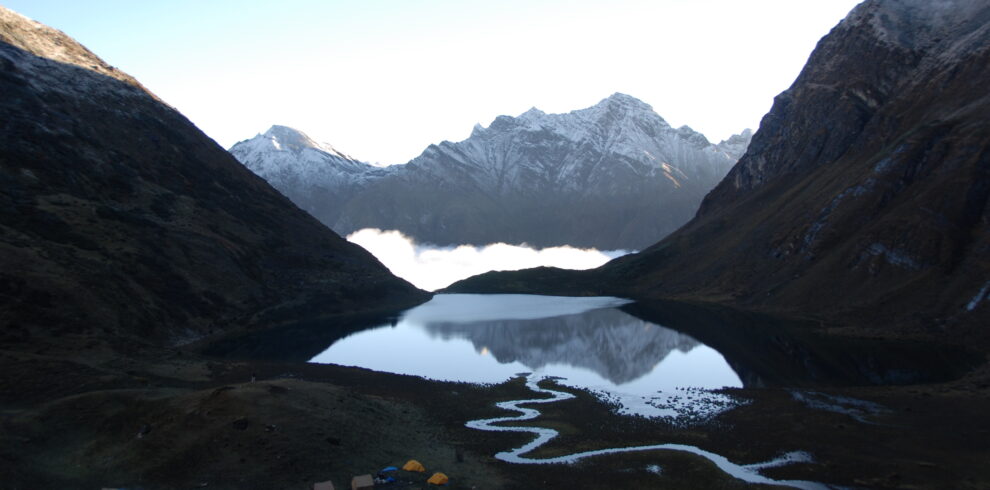
We take a rest day to adjust to altitude, with optional hikes to a glacier viewpoint or the scenic Tshophu Lake near Nyile La pass. These excursions offer spectacular photography opportunities in this remote Himalayan landscape.
Trek over rolling grasslands and brush to Nyile La (4850m). Enjoy views of Jichu Drake, then descend through rhododendron to Lingshi village, noting the Lingshi Dzong, built for protection against Tibet’s raids.
Ascend past Lingshi Dzong to Chebisa, a picturesque village with shingle-roofed houses. Visit a waterfall and hanging lake nearby. Blue sheep graze the alpine pastures above the village.
Undulating trail to Gombu La (4440m) with great views of Lingshi and surrounding peaks. Descend through forests of cypress, spruce, and birch to camp near yak herder camps at Shomuthang.
Ascend to Jare La, then descend through rhododendron and birch forests, meeting Laya people with their distinctive hats. Camp at Robluthang after hiking up the valley.
Ascend to Sinche La (5005m), enjoy views of Gangchenta, then descend past glaciers and a large lake to the forested camp at Lemithang, with the Tigers Ears as a backdrop.
Descend to Laya village, the largest of the trek. Laya is a high-altitude, isolated village dependent on yaks and crops. Visit a school, health unit, and gompa, with views of Masang Gang (7194m).
Take a well-deserved rest after the recent challenging days. Enjoy a relaxed morning and spend time in Laya, perhaps threshing wheat with local women, visiting the school, or sipping tea at a small shop.
Start early for a tough day with steep uphill sections. After passing the Army Camp and crossing the river, we begin ascending towards Lunana’s remote areas. The trail winds through lush forests of pines, oaks, and rhododendrons, eventually leading to a broad alpine pasture valley. Evening camps will be cooler due to higher elevations.
Ascend through dwarf rhododendrons and reach Tsemo La (4905m). After descending, enjoy views of snowy peaks, with Gangla Karchung (6395m) being the tallest. Camp among glaciers, moraines, and small alpine lakes.
After an early ascent, we cross Karakachu La (5165m) with views of Jejekanhphu Gang (7300m) and Tsenda Kang (7100m). The long descent (1200m) takes us through lateral moraine and rhododendron forests, leading to our camp by the river in a valley clearing.
Follow the river, passing landslides that have cleared forests. Climb to the village of Woche (3940m), the first settlement in Lunana. Continue through dwarf rhododendrons to the next pass, with time to enjoy views of the surrounding valley and mountains.
After a short ascent to Keche La (4670m), we descend to Thega village, passing the Pho Chuu river and several small villages. The final leg to Chozo involves crossing a side moraine. The camp offers stunning 360-degree views, with Table Mountain (7100m) dominating the landscape
Relax and unwind with the option to explore the moraine near Table Mountain or enjoy the views of Kangphu Gang (7212m). Visit Chozo Dzong, but remember the legend that warns against loud noises and stepping inside the dzong.
Prepare for two long days of trekking in unpredictable weather. After crossing the river, we begin a steep ascent to Sintia La (5140m), where the lunar landscape and dramatic views of Lunana unfold. The camp is set on a barren plateau, where wildlife like blue sheep or ibex may be seen.
The trail winds between snow-covered peaks and crosses the Loju La (5100m). As we pass ridges, the views expand, offering a panorama of peaks that few, if any, have ever climbed. Our campsite is in a small patch of grassy tundra, nestled between barren rocks and flowing streams.
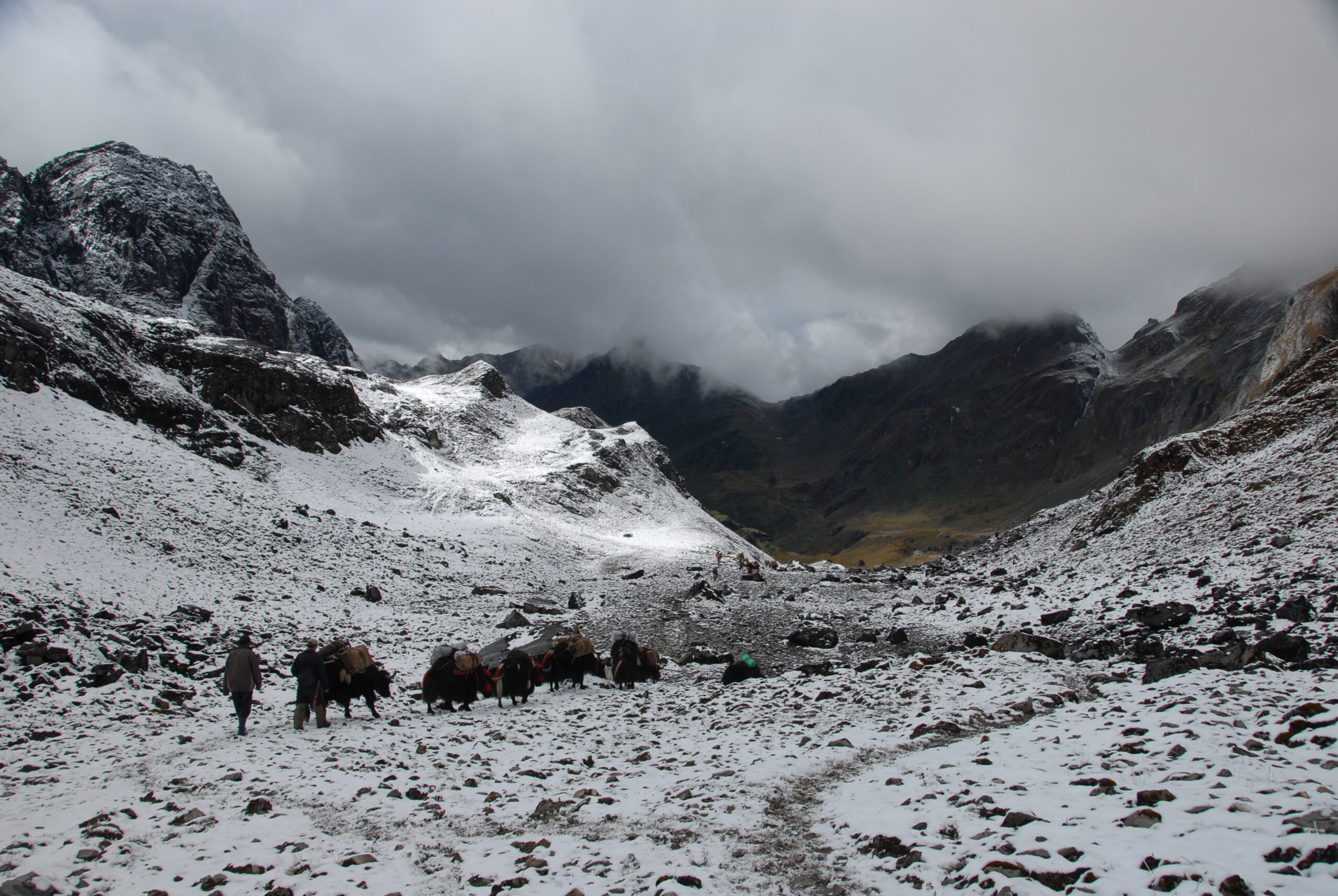
Leaving the yak herder camp below the pass, we trek through a lunar landscape, passing rocks, vibrant green lakes, glaciers, and snowy peaks. Our highest pass, Rinchen Zoe La (5326m), is ahead, offering views of glaciers flowing into two stunning blue lakes. After taking in the scenery, we descend through a moraine and rocky riverbank to our camp by the river in a forest clearing.
We cross the river and follow the valley, entering warmer forests. The trail winds through boulders and dense forest of pines, rhododendrons, birch, and maple. After a solid day of trekking, we reach a lake beneath our final pass, where we set up camp by the beautiful lakeside.
A short climb to Tempe La (4665m) is followed by a steep descent past the turquoise Om Tsho lake. We continue down to the valley floor, following the Nikka Chhu river through rhododendron and pine forests, as well as yak pastures. Be mindful of hidden rhododendron roots. At Marothang, we find the first shop since Laya. If we're using yaks, we'll switch to horses for the final day's trek.
The trail follows the Nikka Chhu through lush forests before opening up to bamboo thickets and hillside farms in Sephu. Our transport meets us at the trailhead for a two-hour drive to Punakha, marking the end of the trek and our return to civilization.
We start early for the drive from Punakha to Paro. Our first stop is the Paro Dzong, a fortress at the heart of civil and religious life in Bhutan. After lunch, we visit the Kyichu Lhakhang, one of Bhutan’s oldest monasteries, built in 659 by King Songtsen Gampo of Tibet, with later additions by the Chief Abbot of Bhutan and the Royal Family. Overnight in a hotel.
The trip concludes after breakfast in the morning and depart from Paro airport.