
-
Coaster bus for big group/ Hiace bus for Small group
-
6 to 10 pax
-
Minimum 3 Star
-
English
This 20-day Bhutan birding tour takes you through diverse landscapes, offering chances to spot rare species like the Satyr Tragopan, Himalayan Monal, and White-bellied Heron. Explore top birding sites from Paro to Manas National Park while immersing yourself in Bhutan’s rich culture, visiting monasteries and traditional villages. A perfect adventure for birders and nature lovers.
Upon arrival at Paro International Airport, a representative from Bhutanbird Travel will greet you and transfer you to your hotel.
Your evening birding adventure begins as you explore the Paro riverbank, with a special focus on spotting the wallcreeper, Ibisbill and Brown Dipper. While searching for these target species, you’ll also encounter a variety of other common birds, including the Black-tailed Crake, Olive-backed Pipit, White Wagtail, White-capped and Plumbeous Water Redstart, Rufous-breasted Accentor, Green and Common Sandpiper, and more.
Before heading to eastern Bhutan, today you will embark on a hike to the iconic Tiger's Nest Monastery, a revered Buddhist site. This magnificent monastery is one of Bhutan’s most famous landmarks and is considered one of the most captivating sights in the world. The hike to the monastery takes over two hours from the last road point, with a continuous uphill climb. It’s an exhilarating experience, ascending ladders surrounded by Blue Pine and mixed conifer forests. This rich vegetation is home to a variety of bird species, including the Rufous Sibia, Spotted Nutcracker, Yellow-billed Magpie, and several species of Laughingthrush such as Spotted, Chestnut-crowned, Black-faced, and White-throated. You may also spot Altai, Alpine, and Rufous-breasted Accentors, along with Darjeeling and Rufous-bellied Woodpeckers, Tits, Warblers, and Sunbirds.
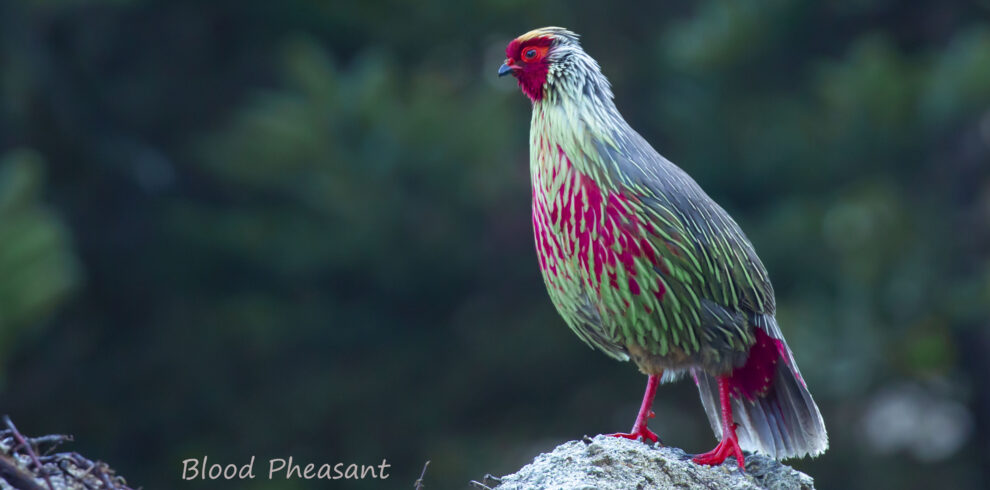
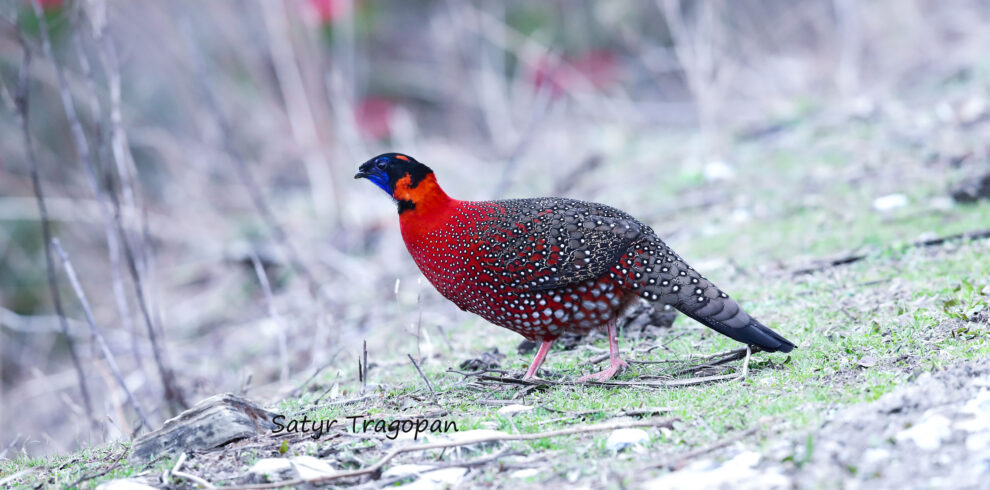
Early morning, you’ll drive to Chelela (about 1 hour, 4000m asl), one of the highest motor-accessible birding spots. Target species today include Pheasants and high-altitude birds. Expect frequent sightings of Kalij Pheasants at the base, then enter the Satyr Tragopan’s habitat, and finally spot the Blood Pheasant and Himalayan Monal at the pass.
Other species include Laughingthrushes, Tits, Grosbeaks, Spotted Nutcracker, Sunbirds, Rosefinches, Woodpeckers, Treecreepers, Magpies, Fulvettas, and Yuhinas.
After birding at the pass, you’ll return to Thimphu. Your final stop will be the sewage pond area near the city to search for Solitary Snipe, Black-tailed Crake, Ibisbill, and Wallcreeper.
The day ends with a break and shopping if needed.
Overnight at Thimphu
After breakfast at the hotel, you’ll drive north of Thimphu towards the National Park jurisdiction. Along the way, you’ll make several stops to search for species like Yellow-rumped Honeyguide, Dark-breasted Rosefinch, Little Forktail, and other common birds.
Upon entering the park, you’ll notice a dramatic change in vegetation, transitioning from Blue Pine forest to cool broadleaf forest and finally to mixed conifer forest. Each habitat supports different species, so be on the lookout for the Great Parrotbill, Woodpeckers, Robins, Laughingthrushes, Thrushes, Satyr Tragopan, Himalayan Monal, Fulvettas, Finches, Grosbeaks, Tits, Eurasian Wren, and Warblers.
After birding for a few hours, you’ll enjoy lunch at the base of Cheri Monastery. In the afternoon, you’ll hike to the monastery, where you may encounter Himalayan Ghoral and Gray Langur along the trail, as well as various bird species.
Overnight Thimphu.
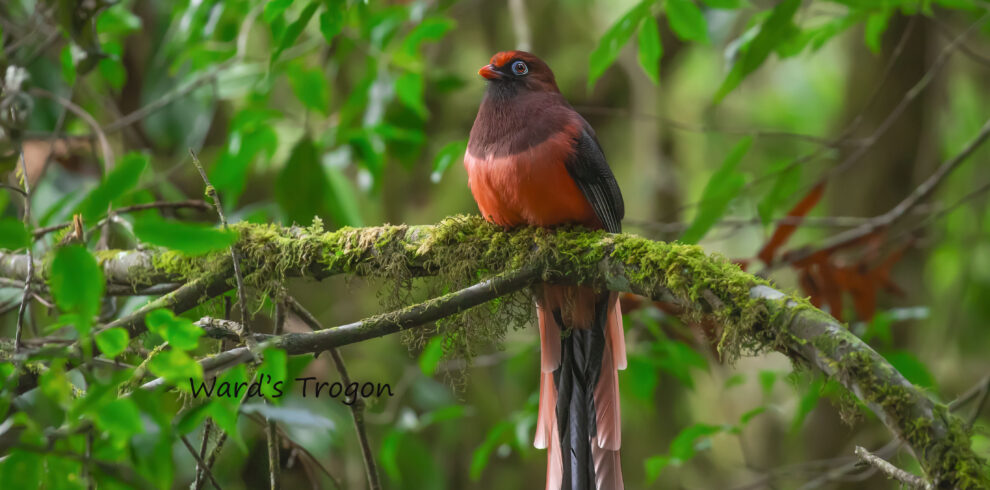
In the early morning, you'll drive towards Punakha (approximately 2.5 hours), with a stop at Dochula Pass (3150 masl). Here, you’ll search for alpine species such as Finches, Yuhinas, Eurasian Jay, Fire-tailed Myzornis, and others. As you descend, you’ll visit the Royal Botanical Park, known for its rich broadleaf forests that provide excellent wildlife habitats. While exploring the park's nature trails, look for Ward's Trogon, Golden-breasted Fulvetta, Slender-billed and Streaked-breasted Scimitar Babbler, Grey-sided Laughingthrush, and many more.
Continuing your journey to Punakha Valley, you'll look for species like Scarlet and Long-tailed Minivet, Great and Golden-throated Barbet, and other resident birds. In the evening, you’ll drive along the Po Chhu River to search for the critically endangered White-bellied Heron and the vulnerable Pallas’s Fish Eagle. Other species in the area include migratory waterfowl, occasional sightings of the vagrant Mandarin Duck, Ibisbill, Red-wattled Lapwing, Common and Crested Kingfisher, and a few raptors.
Overnight: Punakha.
We’ll spend the entire day exploring the rich avifauna of Jigme Dorji National Park. This region, renowned for its diverse birdlife, also serves as the winter habitat for Bhutan’s national animal, the Bhutan Takin. Our birding targets will include the Nepal and Rufous-winged Fulvetta, various Woodpeckers, Barbets, Laughingthrushes, Robins, Flycatchers, and both large Rufous-bellied and Small Niltava. We’ll also look for Thrushes, a range of raptors, and the elusive Spotted Elachura (formerly the Spotted Wren Babbler), along with all species of Tesia.
If fortune is on our side, we might also have the chance to spot the Bhutan Takin, with many of our previous clients having been fortunate enough to encounter this majestic animal during their excursions.
Overnight: Punakha.
We’ll start early for a scenic 4-hour drive to Phobjikha Valley, passing through a mix of warm and cool broadleaf forests. Along the way, we’ll make several stops to explore the diverse vegetation, rewarding us with sightings of Yellow-rumped Honeyguide, Himalayan Cutia, Chestnut-bellied Nuthatch, Ward's Trogon, Hoary-throated Barwing, Blyth’s Shrike-babbler, Bhutan and Rufous-chinned Laughingthrush, Himalayan Bluetail, Grey-bellied Tesia, Rufous-capped and Golden Babblers, and Rufous-bellied Woodpecker, among others.
Before reaching Pelela Pass, we’ll veer towards Phobjikha Valley, crossing Lawala Pass where the vegetation shifts to dwarf bamboo. Here, we’ll be on the lookout for species like Spotted, Chestnut-crowned, and Black-faced Laughingthrushes, Spotted Nutcracker, Great and Brown Parrotbills, Oriental Skylark, White-browed Shortwing, Yellow-billed Blue Magpie, Chestnut-headed Tesia, Red-billed Chough, Large-billed and Whistler’s Warblers, Slender-billed Scimitar Babbler, and Oriental Skylark.
Overnight: Phobjikha.
After an early breakfast, we’ll head towards Pelela Pass (3400 m), where we’ll spend the morning birding along the old road. Our main focus will be on spotting the Satyr Tragopan, along with other high-altitude species such as Great and Brown Parrotbills, Plain Mountain Finch, Spotted Laughingthrush, Himalayan Griffon, White-winged and Collared Grosbeaks, Spotted Nutcracker, Slaty-blue and Grey-sided Bush Warblers, and a variety of Tits. We will also search for Himalayan Monal, Fire-tailed Myzornis, and Rosefinches, including Dark-rumped, Dark-breasted, and White-browed, along with Fire-tailed and Green-tailed Sunbirds, Gold-napped and Crimson-browed Finches, and Darjeeling Woodpecker.
As we continue our drive to Trongsa, we’ll keep an eye out for species like Golden-breasted, White-browed, and Rufous-winged Fulvettas, Speckled Wood Pigeon, Ultramarine Flycatcher, Black-winged Cuckoo Shrike, Nepal House Martin, Blyth’s Swift, White-throated Needletail, Black Eagle, and Streak-breasted and Rusty-cheeked Scimitar Babblers, among others.
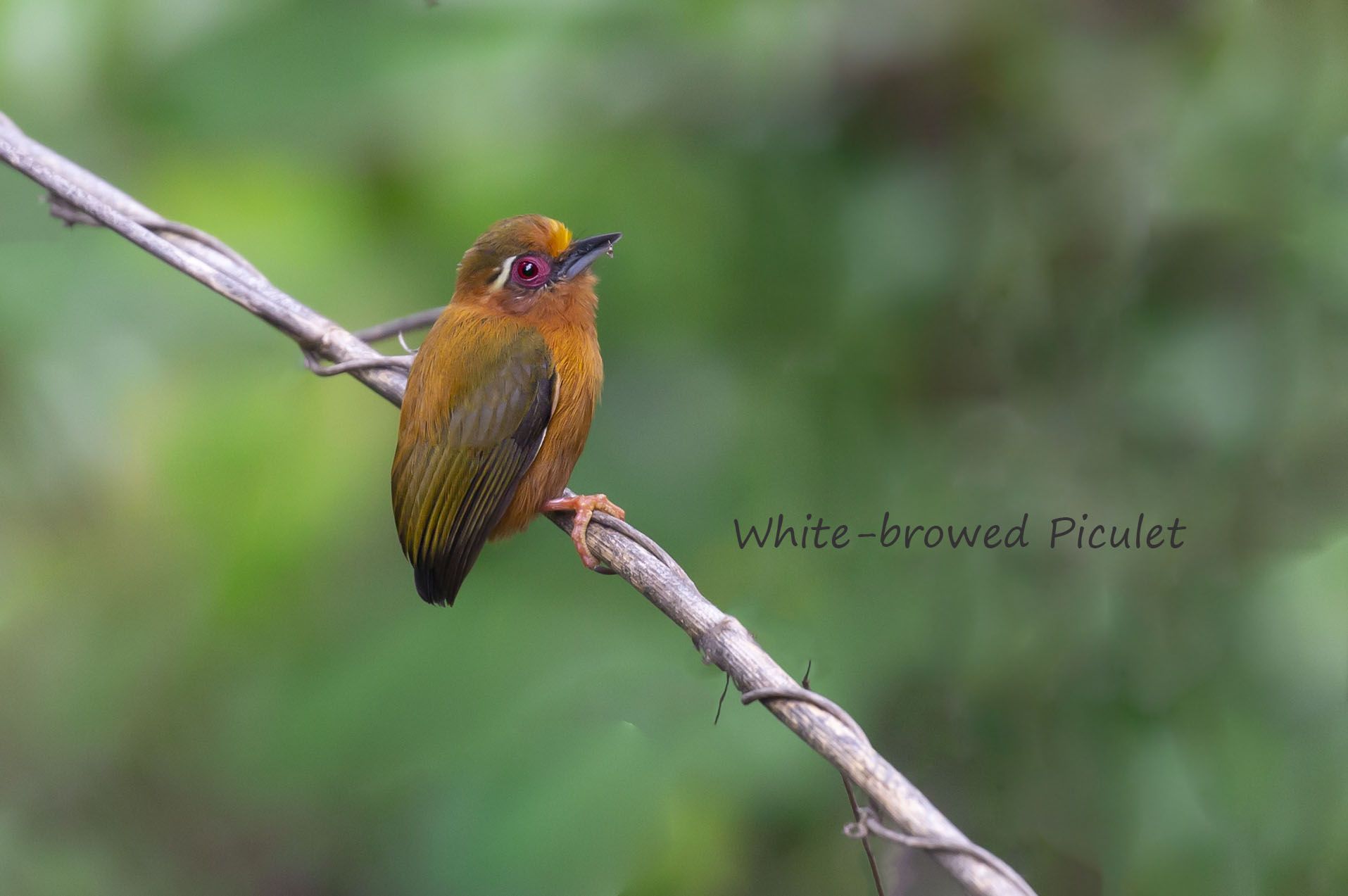
Today, we’ll drive to Zhemgang and then onward to Tingtibee (6-hour drive), following the Mangde Chhu River. This area is home to a variety of species, including the Red-headed Trogon, Rufous-necked Hornbill, Great Hornbill, Blue-bearded Bee-eater, Pin-tailed Green Pigeons, Rufous-throated Partridge, Hill Partridge, Coral-billed Scimitar Babbler, White-browed Piculet, Speckled Piculet, Mountain and Collared Scops Owls, Collared Treepie, Bay Woodpecker, White-tailed Robin, and Black-faced Laughingthrush. Other birds you may encounter include the Grey-headed Parrotbill, Pygmy-blue Flycatcher, and rare species like the critically endangered White-bellied Heron, Collared Treepie, Beautiful Nuthatch, and both Greater and Lesser Rufous-headed Parrotbills, as well as the Lesser-necklaced and Greater Necklaced Laughingthrushes.
In terms of mammal sightings, expect to spot the Golden Langur, Assamese Macaque, Malayan Giant Squirrel, and more.
Overnight: Tingtibee.
Today, we’ll explore a variety of habitats along the Zhemgang-Tingtibee roads, ranging from mossy forests to streamside lowland forests. This offers another opportunity to spot the Golden Langur, which is relatively common in the area. We’ll also be on the lookout for Rufous-necked and Great Hornbills, Pin-tailed and Wedge-tailed Green Pigeons, Cutia, Scarlet Minivet, various species of beautiful Laughingthrushes, Spotted Wren Babblers, and the elusive Beautiful Nuthatch.
In the afternoon, we’ll head to Gomphu Road, which leads to Manas National Park. Here, we’ll search for Lesser Rufous-headed Parrotbill, White-hooded Babbler, Grey-throated and Rufous-capped Babblers, Lesser Yellownape, Blue-bearded Bee-eater, Lesser Necklaced Laughingthrush, Blue-throated Flycatcher, Striated and Black-chinned Yuhinas, Chestnut-winged Cuckoo, Drongo Cuckoo, Common Green Magpie, Emerald Dove, and White-throated Bulbul. With some luck, we may also spot the Pale-headed Woodpecker.
Overnight: Tingtibee.
After the final morning of birding, we’ll make our way towards central Bhutan. Along the route, we’ll encounter species like Gray-headed Parrotbill, Speckled Piculet, Red-headed Trogon, and various Woodpeckers including Rufous, Bay, and Slaty-headed. Other highlights include Blyth’s Shrike-Babbler, Blue-capped and Chestnut-bellied Rock Thrushes, Bhutan Laughingthrush, Prinias, Minivets, and more.
The drive continues for another 3 hours after Trongsa, leading us through Yotongla Pass. Here, we’ll search for Chestnut-tailed Minla, Brown and Great Parrotbills, Spotted, Black-faced, and Chestnut-crowned Laughingthrushes, Darjeeling Woodpecker, and Red-headed Bullfinch, as well as Slender-billed Scimitar Babbler, Grey-crested, Coal, Rufous-vented, and Rufous-fronted Tits, Rufous-breasted Accentor, and Plain Mountain Finch.
Upon entering the first Bumthang valley after the pass, we’ll spot Eurasian Magpies. This species, once found exclusively in this region of Bhutan, has since been recorded in Phobjikha and, more recently, in Zhemgang and Yongkala.
Overnight: Bumthang.
In the morning, we’ll drive back towards the Tharpaling Monastery road. Along the way, we’ll pass through pristine blue pine forests, where we may spot the elusive Satyr Tragopan. Once we reach the monastery, we’ll have the chance to observe cooperative Himalayan Monals feeding nearby, as well as Beautiful Rosefinch, Snow Pigeon, Eurasian Magpie, and other common species.
Overnight in Bumthang.
Today, we’ll drive from Bumthang to Yongkala, crossing over Thrumshingla. This area is a prime habitat for Blood Pheasants and also hosts several high-altitude species, including Snow Pigeons, Orange-flanked Bush Robin, Golden and White-browed Bush Robins, Fire-tailed Myzornis, Spotted Nutcracker, Red-billed Chough, Fire-tailed Sunbirds, Great Parrotbills, Stripe-throated and Rufous-vented Yuhinas, Grey-crested and Coal Tits, White-browed Fulvettas, Dark-rumped Rosefinch, Plain-backed Thrush, White-collared and Grey-winged Blackbirds, Rusty-flanked Treecreeper, Buff-barred and Ashy-throated Warblers.
Later, we’ll bird around Sengor, which is renowned as a hotspot for Satyr Tragopan. We’ll also look for Bar-winged and Scaly-breasted Wren Babblers, Gold-naped Finch, Hoary-throated Barwing, Bar-throated and Red-tailed Minlas, Whistler’s and Grey-hooded Warblers, and Slender-billed Scimitar Babbler.
Yongkala is renowned as one of the top birding destinations in Bhutan, often referred to as a birding paradise. Over the next two days, we will explore both the upper and lower Limithang roads in search of a variety of species. Expect to see flocks of Greater Rufous-headed and Black-throated Parrotbills, Golden-breasted and Yellow-throated Fulvettas, as well as Rufous-throated, Long-billed, Pygmy, and Sikkim Wedge-billed Wren Babblers. We’ll also be on the lookout for Grey-bellied, Slaty-bellied, and Chestnut-headed Tesias, Red-headed and Ward's Trogon, Hoary-throated Barwing, Great and Golden-throated Barbets, Himalayan Cutia, and various Warblers like Black-faced, Whistler’s, and Grey-cheeked.
Additional species include the Beautiful and White-tailed Nuthatch, Rufous-necked Hornbill, Grey-chinned Minivet, a variety of Babblers and Tits, Coral-billed, Slender-billed, and Streak-breasted Scimitar Babbler, along with numerous Laughingthrush species, Birds of Prey, Flycatchers, Robins, Leafbirds, Woodpeckers, and many more.
Today, we'll travel through a variety of habitats, starting with the Chirpine Forest where we'll search for the Slender-billed Oriole and other species. After crossing the Mongar Valley, we’ll head to Korila Pass for some birding, looking out for Thrushes, Gold-napped Finch, Laughingthrushes, Fire-tailed Myzornis, and more.
Next, we’ll visit the logging road to search for Ward’s Trogon, Rufous-necked Hornbill, Grey-sided Laughingthrush, and other Laughingthrush species. We’ll then continue our drive to Tashigang, making stops along the way as needed.
Overnight: Tashigang
While spotting additional species may be challenging along this route, you’ll still enjoy the journey with close-up views of Yellow-rumped Honeyguide. Some highlights along the way include Thrushes, Nuthatches, Drongos, Scimitar Babblers, Minivets, Hornbills, and other common species.
Overnight: Camp at Morong
After passing several excellent birding sites and missing the Beautiful Nuthatch, you’ll have another opportunity to spot this elusive species. This area is known for offering great sightings of Beautiful Nuthatch. In addition to that, you'll be on the lookout for Himalayan Cutia, Blyth’s Shrike Babbler, Leafbirds, various Drongos, Silver-eared Mesia, Laughingthrushes, Rufous-necked and Great Hornbills, Treecreepers, Black-faced Warblers, Tits, Woodpeckers, and many more species.
As we descend into the subtropical foothills, we may spot Wreathed and Oriental Pied Hornbills, Violet Cuckoo, Dark-rumped Swift, Pied Falconet, Asian Paradise Flycatcher, various other Flycatchers, Orange-headed Thrush, Puff-throated Babbler, additional babblers, Laughingthrushes, and Green Pigeons.
Overnight: Samdrup Jongkhar
The Bhutanbird Tour team will bid you farewell and wish you safe travels. We look forward to welcoming you again on your next adventure with us.